How I Help My Kid Study Without Doing It For Them — What's Working at Our House
I used to sit next to my daughter and basically do her homework with her. Here's what changed, why it was hard, and what we do differently now.
Maya R.
Junior, Biology major
For Parents · EZ Grades
I'm writing this as a student who has also watched my mom navigate this exact challenge with my younger sister. What I've observed — and what the research backs up — is that the most well-meaning parental help can actually make things worse.
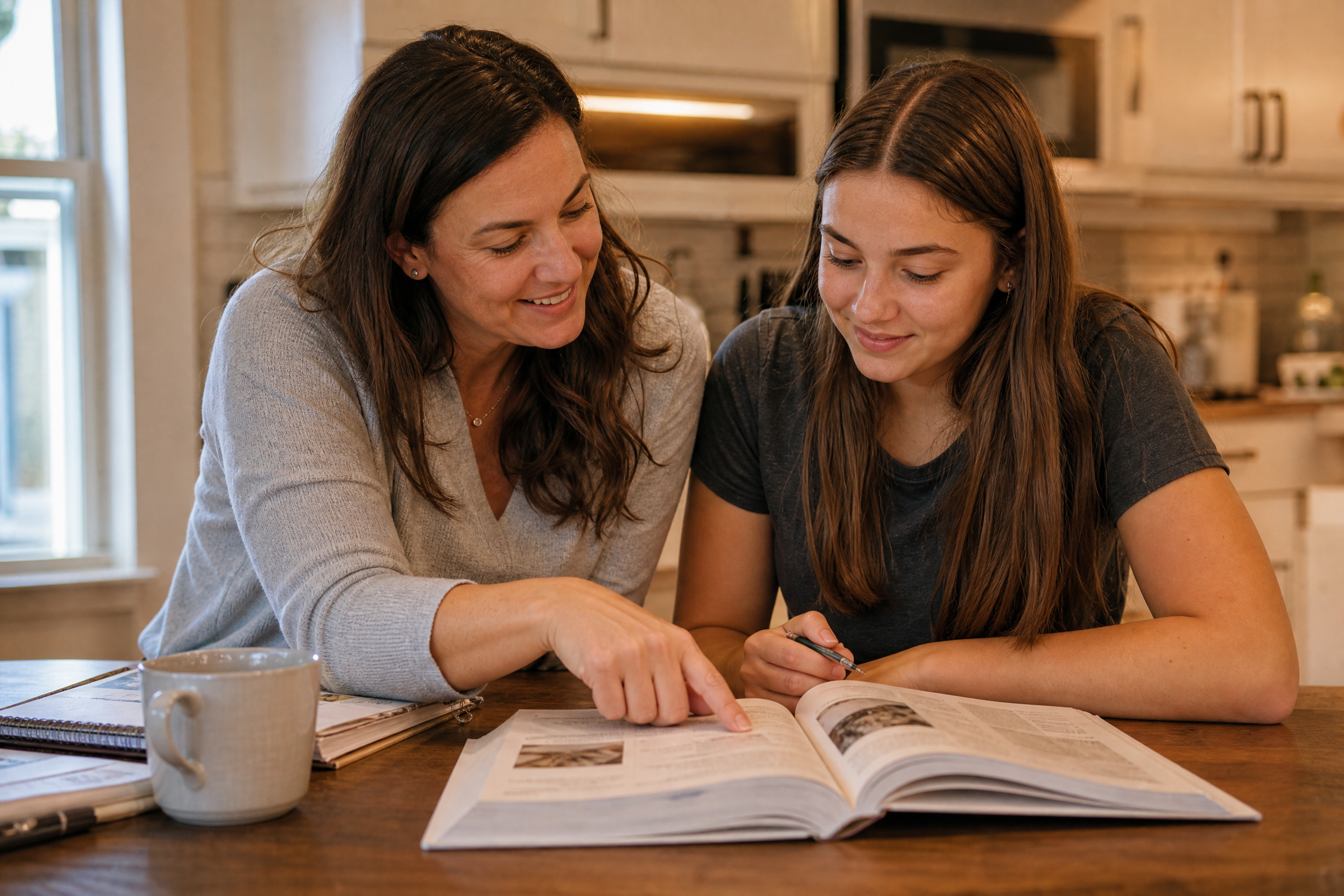
My mom used to sit with my sister every evening and work through her homework with her. My sister would get the work done, but she wasn't learning — she was just following my mom's lead. When exams came, she was lost.
Here's what changed at our house, and why it was hard.
The Hard Conversation
The shift started when my sister's teacher told my mom that she was concerned my sister couldn't work independently. My mom was hurt — she'd been spending hours every evening helping. But the teacher was right.
The problem wasn't that my mom was helping. It was how she was helping. She was providing answers instead of guiding thinking.
What Changed

My mom started asking questions instead of giving answers. Instead of "the answer is 7," she'd ask "what do you think you need to do first?" Instead of explaining a concept, she'd ask "can you explain this to me in your own words?"
This was harder for both of them. My sister got frustrated when she wanted an answer and got a question instead. My mom found it difficult to watch her struggle without jumping in.
But within a few weeks, something shifted. My sister started approaching problems more independently. She'd try things before asking for help. Her confidence improved.
The Rule We Use Now
The rule my mom settled on: help with process, not content. She'll help my sister figure out how to approach a problem — what steps to take, what resources to use, how to break it down — but she won't provide the answer or explain the concept directly. That's what teachers and tutors are for.
What I'd Tell Other Parents

The goal of homework isn't to get it done. The goal is for your child to develop the ability to do it themselves. Every time you provide an answer, you're short-circuiting that development — even when it feels like you're helping.
The most useful thing you can do is create the conditions for independent work: a quiet space, a consistent time, and the expectation that they'll try before asking for help.
The Scaffolding Approach
The most useful framework I've encountered for helping without doing: scaffolding. The idea is to provide just enough support for the student to make progress, then gradually remove that support as they become more capable.
In practice:
- First time with a new type of problem: Work through a similar example together, explaining your thinking out loud
- Second time: Let them try first, then discuss where they got stuck
- Third time: Let them work independently, available for questions
- After that: They should be able to do it without help
The key is that the scaffold is temporary. If you're still working through every problem together after a month, the scaffold has become a crutch.
Signs That Help Has Become Harmful
- Your child can't start homework without you present
- They ask for help before attempting the problem
- They get significantly lower grades on tests than on homework
- They say "I don't know" without trying
- They seem to have no idea how to approach a problem type they've done many times before
If you recognize these patterns, the help has become too much. The fix is gradual withdrawal: start requiring them to attempt the problem before asking for help, then require two attempts, then require them to identify specifically what they're stuck on before you'll help.
Frequently Asked Questions
Q: How do I know when my child genuinely needs help vs. when they're just avoiding the struggle?
Ask them to explain what they've tried and where they got stuck. If they can't answer, they haven't tried. If they can explain their attempt and the specific point of confusion, they've done the work and genuinely need help.
Q: What if my child gets frustrated when I ask questions instead of giving answers?
This is normal, especially at first. Acknowledge the frustration: "I know it's frustrating when I don't just tell you the answer. I'm doing this because I want you to be able to do this on your own." Stay calm and consistent. The frustration usually decreases as they develop confidence.
Q: What if I don't know the answer myself?
This is actually a great opportunity. Work through it together, modeling how to approach an unfamiliar problem: "I don't know this either. Let's figure it out together. Where would we look?" This teaches problem-solving skills more effectively than knowing the answer.
Q: At what age should children be doing homework completely independently?
This varies by child and subject, but as a rough guide: by middle school, most students should be doing most homework independently, with parents available for questions. By high school, homework should be almost entirely independent. If your high schooler can't work independently, the issue may be study skills, not subject knowledge.
Related Articles

My Honest Review of Active Recall After Using It for One Full Semester

A Walkthrough of My Messy Desk (And How I Reorganized It to Actually Focus)