SAT Prep: What I Wish I'd Known Before I Started (A Student's Honest Retrospective)
I took the SAT twice. The second time, I scored 180 points higher. Here's the difference in how I prepared — and the mistakes I made the first time.
Carlos M.
High School Senior

Test Preparation · EZ Grades
I took the SAT for the first time in October of junior year. I'd done some prep — a few practice tests, some Khan Academy — but I hadn't taken it seriously. I got a 1240, which was below where I wanted to be for the colleges I was considering.
I retook it in March and got a 1420. Here's what I did differently.
What I Did Wrong the First Time
I treated SAT prep like studying for a regular exam — reviewing content, reading about strategies, doing some practice. What I didn't do was practice under real conditions. I'd do practice sections but pause them when I got distracted, look things up when I was stuck, and skip questions that seemed hard.
This meant I had no idea how I'd perform under actual exam conditions — timed, no breaks, no looking things up — until I was in the exam room.
What I Did Differently the Second Time
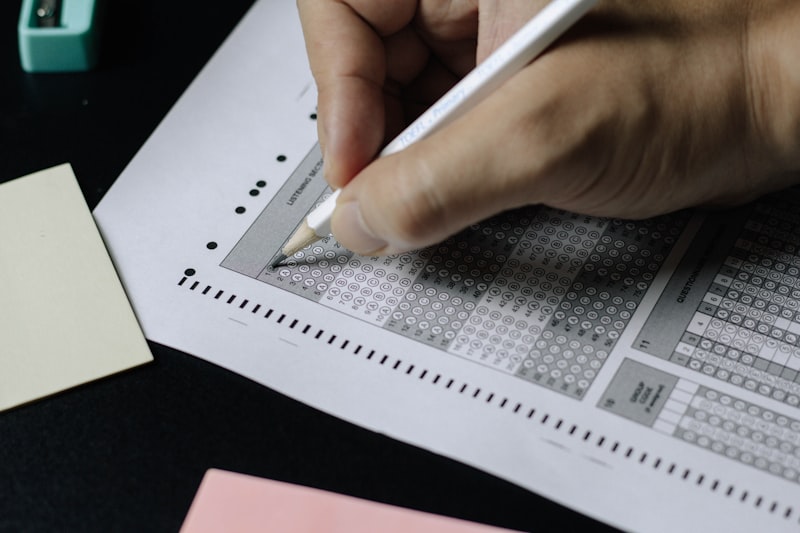
Full-length practice tests, properly. I did four full-length practice tests under real conditions: 3 hours, no breaks beyond the scheduled ones, no phone, no looking things up. I scored and reviewed each one immediately afterward.
The first practice test was humbling — I ran out of time on the math section and guessed on the last 8 questions. But it told me exactly what I needed to work on.
Targeted practice on weak areas. My diagnostic tests showed I was losing points on two specific things: data interpretation questions in the reading section and geometry in the math section. I spent 80% of my prep time on those two areas specifically.
Learning the test format. The SAT has predictable question types and common traps. I learned these patterns by reviewing wrong answers carefully — not just what the right answer was, but why my answer was wrong and what trap I'd fallen into.
Timing practice. I practiced each section with a timer until I could consistently finish with a few minutes to spare. Running out of time was my biggest problem the first time, and it's entirely solvable with practice.
The Honest Advice
The SAT is a learnable test. The skills it tests — reading comprehension, mathematical reasoning, grammar — can be improved with deliberate practice. But the practice has to be realistic. Doing practice sections in a comfortable, distraction-free environment with unlimited time will not prepare you for the actual exam.
A Realistic SAT Prep Timeline

Here's the timeline I'd recommend based on my experience:
3+ months out: Take a full diagnostic practice test under real conditions. Score it and identify your two or three biggest weaknesses. Start targeted practice on those areas.
2 months out: Take a second full practice test. Compare your score to the diagnostic. Are you improving in your weak areas? Adjust your focus based on the results.
1 month out: Take two more full practice tests. Focus on timing and pacing. Make sure you can finish each section with a few minutes to spare.
1 week out: Light review only. Go over your wrong answers from practice tests. No new material. Get your sleep schedule right.
Day before: Rest. Light review if it makes you feel better, but don't cram. Pack your bag the night before. Go to bed at a reasonable time.
Free vs. Paid SAT Prep
Khan Academy's SAT prep (free, official partnership with College Board) is genuinely excellent and is what I used for most of my prep. The official College Board practice tests are the most accurate representation of the real exam.
Paid prep courses can be useful if you need structure and accountability, but they're not necessary. The free resources are comprehensive enough for most students.
Frequently Asked Questions
Q: How many times should I take the SAT?
Most students take it twice: once to get a baseline score and once after targeted preparation. Taking it more than three times rarely produces significant improvements and can look unfavorable to some colleges. Focus on preparing well for each attempt rather than taking it many times.
Q: Is the SAT or ACT better?
Neither is universally better — it depends on your strengths. The ACT has a science section and is generally considered more straightforward. The SAT has more complex reading passages and math that requires more reasoning. Take a practice test for each and see which feels more natural.
Q: How much can I realistically improve my SAT score?
With 3–6 months of serious preparation, most students can improve 100–200 points. Improvements of 200+ points are possible but require significant time investment and often indicate that the first score was below the student's actual ability level.
Q: Should I take an SAT prep class?
Only if you need the structure and accountability. The free resources (Khan Academy, official practice tests) are comprehensive. If you're self-disciplined enough to study independently, a class isn't necessary. If you struggle to study without external accountability, a class might be worth the investment.
Related Articles

I Tried 5 Different Study Apps — Here's Which One Actually Saved Me Time
10 Free Study Resources for Students: Independent Comparison (2026)
